
GST Rates and HSN Codes
The Top GST Rates and HSN Codes Goods and Services Tax (GST) has transformed the Indian taxation system by bringing multiple indirect taxes under one unified structure. Whether you run a business, manage accounts, or learn Tally, you cannot operate without understanding two major elements of GST compliance: GST Rates and HSN Codes. These two components determine how tax is calculated, how invoices are generated, how returns are filed, and how businesses stay legally compliant.
This detailed and user-friendly guide covers everything you need to know—what GST rates are, how HSN codes work, why they matter, and how they’re applied in invoicing and accounting. Written in a clear and conversational style, this article aims to make GST concepts easy even for beginners.
What Is GST?
GST (Goods and Services Tax) is a destination-based indirect tax applied on the supply of goods and services in India. It replaced multiple taxes like VAT, Excise Duty, Service Tax, CST, and Entry Tax.
GST has four components:
- CGST – Central GST
- SGST – State GST
- IGST – Integrated GST (for interstate supply)
- UTGST – Union Territory GST
GST Rates and HSN Codes simplified business compliance by creating a single tax structure across the country.
GST, or Goods and Services Tax, is one of the biggest tax reforms in India’s history. Introduced on 1st July 2017, GST replaced a complex network of indirect taxes and created one unified tax system for the entire country. Before GST, businesses had to deal with multiple taxes like VAT, Service Tax, Excise Duty, Entry Tax, Octroi, CST, and many others. This made compliance complicated, increased costs, and created different tax rules for each state.
GST solved this problem by merging all major indirect taxes into a single tax, making business operations smoother, fairer, and easier to manage.
GST in Simple Words
GST is a single tax that is charged on the supply of goods and services.
You pay GST when you buy anything—whether it’s a product or a service.
For example:
- When you buy a mobile phone → GST is added
- When you eat at a restaurant → GST is added
- When a business sells goods → GST is charged
- When a company provides services → GST applies
Because GST is applied at every stage of supply, it becomes a multi–stage tax, but due to the input credit system, businesses only pay tax on the value added, not the total amount.
Why Was GST Introduced?
GST was introduced to eliminate problems caused by the old taxation system. Some of the biggest problems were:
Too many taxes
VAT, Excise, CST, Service Tax, Luxury Tax, Octroi, Entertainment Tax… the list was long.
Complex compliance
Businesses needed separate registrations, returns, and payments for each tax.
Cascading effect or “tax on tax”
In the old system, you paid tax on the value of goods including previously paid tax, increasing costs.
Different rules in different states
Each state had its own VAT rules, creating confusion for businesses.
To solve all this, GST Rates and HSN Codes created One Nation, One Tax, One Market.
Key Features of GST Rates and HSN Codes
1. One unified tax
GST combines multiple indirect taxes into one system, making compliance simple.
2. Applied on supply
GST is charged on the supply of goods and services, not on manufacturing alone.
3. Destination-based tax
GST is paid where goods/services are consumed—not where they are produced.
4. Eliminates cascading effect
The input tax credit system removes double taxation.
5. Transparent and digital system
All GST processes—from registration to return filing—are online.
6. Standard tax rates
GST has fixed slabs: 0%, 5%, 12%, 18%, 28%.
7. Same rules across India
GST rules and rates are consistent across all states and union territories.
Types of GST in India
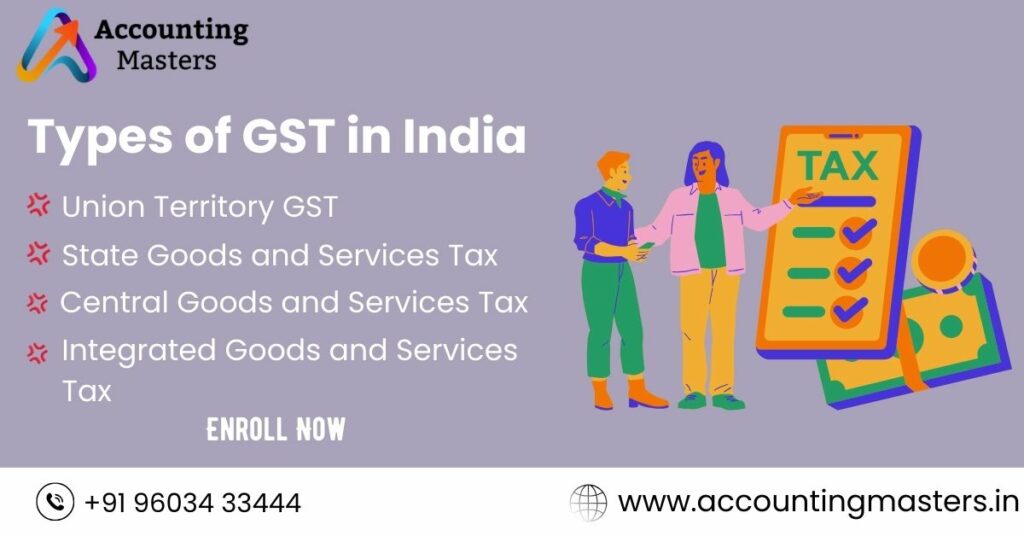
To make revenue sharing easier, GST is divided into different components:
1. CGST – Central Goods and Services Tax
When a transaction happens within the same state (intra-state), the central government collects CGST.
Example: Hyderabad to Vijayawada (within the state).
2. SGST – State Goods and Services Tax
Collected by the respective state government in the same intra-state transaction.
So, a bill inside Telangana will show:
CGST + SGST
3. IGST – Integrated Goods and Services Tax
When goods/services are moved from one state to another, IGST applies.
Example: Hyderabad to Bangalore.
Only the central government collects IGST and then distributes a share to states.
4. UTGST – Union Territory GST
Used when supply takes place in a Union Territory like:
- Delhi
- Andaman & Nicobar
- Puducherry
- Lakshadweep
It functions the same as SGST.
How GST Works: The Input Tax Credit (ITC) System
One of the biggest benefits of GST is the Input Tax Credit, which means:
A business can claim back the GST it paid on purchases.
Example:
- Purchase GST paid: ₹500
- Sales GST collected: ₹900
Business will pay only ₹400 to the government (900 – 500)
This ensures tax is charged only on the value added, not the entire selling price.
How GST Improved India’s Economy
GST has helped the Indian economy in many ways:
Reduced tax burden on consumers
Decreased corruption and manipulation
Made interstate business smoother
Increased government revenue
- Encouraged small businesses to join the formal economy
- Boosted digital payments and digital record-keeping
Because of GST, India now has a cleaner, simpler, and more predictable tax system.
Who Should Register Under GST?
GST registration is mandatory for:
- Businesses with turnover above ₹40 lakh (goods)
Businesses with turnover above ₹20 lakh (services)
- Online sellers (mandatory)
- E-commerce operators
Inter-state suppliers
Casual taxable persons
Without GST registration, a business cannot legally collect GST from customers.
Why Understanding GST Rates and HSN Codes Is Important for Businesses?
Every business—small or big—must understand GST to:
Prepare correct invoices
File GST returns
- Avoid penalties
- Claim input tax credit
- Manage accounts properly
- Follow legal standards
Whether you’re an accountant, business owner, or Tally student, clear knowledge of GST is essential.
Simple Real-Life Example of GST
Let’s say a shopkeeper buys a product worth ₹1,000 at 18% GST:
He pays:
₹1,000 + ₹180 = ₹1,180
He sells the product for ₹1,500 at 18% GST:
Customer pays:
₹1,500 + ₹270 = ₹1,770
Shopkeeper pays GST like this:
Output GST (from customer): ₹270
Minus Input GST (paid on purchase): ₹180
Net GST to be paid = ₹90
This reduces tax burden and keeps pricing fair.
Understanding GST Rates
GST rates determine how much tax is charged on goods and services. Rates vary depending on product type, use, classification, and government policy.
In India, GST is applied under the following slabs:
0% GST
Essential items such as:
- Unbranded flour, rice, milk
- Fresh fruits and vegetables
- Life-saving medicines
These products fall under the zero-tax category.
5% GST
Low-rate slab, usually applied to:
- Edible oils
- Household necessities
- Footwear under a certain value
- Certain medicines
12% GST
Applied to widely used goods such as:
- Packaged food items
- Computers
- Mineral water
- Mobile phones (earlier 12%, now 18% for some items)
18% GST
One of the most common slabs, applicable to:
- Electronics
- Branded garments
- Restaurant services
- Industrial goods
- Mobile phones
28% GST
Highest slab, applicable to luxury and sin goods:
- High-end bikes
- Luxury cars
- Air conditioners
- Cigarettes (additional cess applies)
These slab divisions allow the government to categorize goods based on necessity, consumption, and affordability.
Why Are GST Rates Important?
Understanding the correct GST rate is important for:
- Accurate billing and invoicing
Businesses must charge the right rate to avoid penalties.
- Correct GST return filing
Incorrect rates lead to mismatched returns in GSTR-1 and GSTR-3B.
- Avoiding government notices
Wrong entries or rates often trigger compliance notices.
- Customer transparency
Clear invoices help avoid disputes with customers.
- Profit and pricing decisions
GST directly affects product price and profit margin.
Because of these reasons, knowing GST rates is essential for accountants, business owners, and Tally users.
GST rates play a crucial role in India’s tax system. They determine how much tax is applied to goods and services and directly impact business pricing, customer affordability, government revenue, market stability, and overall economic growth. Because GST is a nationwide indirect tax, even a small mistake in GST rate selection can lead to compliance issues, penalties, or financial losses. That’s why understanding and using the correct GST rates is extremely important for businesses, accountants, and students learning GST or Tally.
Let’s dive deep into why GST rates matter so much.
1. GST Rates Ensure Accurate Billing
Every invoice generated by a business must reflect the correct GST rate. If the wrong rate is applied:
- The customer may be overcharged or undercharged
- GST liability will change
- The business may have to amend returns
- Input tax credit (ITC) may be rejected
Correct billing builds trust and avoids legal disputes.
2. GST Rates Affect Product Pricing
GST directly influences the price of goods and services.
For example:
- If a product has
5% GST
, it remains affordable. - If it has 18% GST, the final price is higher.
Businesses must use the correct rate, otherwise:
- Prices may not match competitors
- Customers may switch to cheaper alternatives
- Profit margins may decrease
Correct GST rates help maintain balanced pricing.
3. GST Rates Determine Tax Liability
Every business is obligated to pay GST to the government.
Incorrect GST rates lead to:
- Overpayment → Loss of funds
- Underpayment → Penalties + interest
By using correct rates, businesses can calculate their tax liability precisely and avoid unnecessary losses.
4. Essential for Claiming Input Tax Credit (ITC)
GST is designed with the Input Tax Credit system, which allows businesses to claim credit for taxes paid on purchases.
If you use wrong GST rates:
- Your ITC claims may be rejected
- GST department may send notices
- GSTR-2B may show mismatch
- You may lose credit and pay extra tax
Using accurate GST rates ensures smooth input credit claims.
5. Helps Reduce Tax Evasion
Standardized GST rates across India prevent practices like:
- Underbilling
- Manipulation of tax
- Charging different rates in different states
- Illegal discounting or rate negotiations
Uniform GST rates create fairness and reduce tax evasion opportunities.
6. Required for GST Return Filing
Monthly and annual GST returns (GSTR-1, GSTR-3B, GSTR-9) require correct classification of sales and purchases.
GST rates affect:
- Output tax (collected from customers)
- Input tax (paid on purchases)
- Net GST payable
- Tax liability shown in returns
Incorrect rates will cause mismatches and may lead to:
- Late fees
- Notices
- Risk of audit
Proper GST rate usage ensures accurate return filing.
7. Consumer Transparency and Trust
Customers today are aware of GST and often check invoices.
When businesses use correct GST rates:
- Customers trust the brand
- There are no hidden charges
- Pricing becomes transparent
- It reduces disputes during billing
Transparent GST rates increase customer satisfaction.
8. Helps Businesses Maintain Competitiveness
GST rates influence how competitive a product is in the market.
Example:
If you charge 18% GST for a product that actually has 12%, your price becomes higher than competitors even if the product quality is the same.
Correct GST rates help businesses:
- Offer competitive pricing
- Avoid unnecessary taxes
- Maintain better profit margins
- Match industry standards
9. Ensures Compliance with Government Rules
The GST Council regularly updates GST rates. Businesses must follow these updates to remain compliant.
Correct GST rate usage helps avoid:
- Show-cause notices
- Penalties
- Audits
- Blocking of ITC
Compliance protects the business from legal complications.
10. Essential for Inventory and Accounting Accuracy
Products in inventory must have correct GST rates assigned to them.
Otherwise:
- Stock valuation gets affected
- Profit margins change
- GST calculations become inaccurate
- Reports in Tally or ERP get mismatched
Accurate GST rates ensure reliable accounting and reporting.
11. Helps the Government Maintain Economic Balance
GST rates play a major role in economic policy.
For example:
- Low GST rates → essential products become affordable
- High GST rates → luxury goods contribute more revenue
By structuring GST rates in slabs (0%, 5%, 12%, 18%, 28%), the government balances:
- Consumer needs
- Industry demands
- Revenue collection
- Inflation control
This keeps the economy stable and efficient.
12. Becomes a Legal Requirement for All Registered Businesses
Every GST-registered business must follow notified GST rates.
Failing to do so can lead to:
- Monetary fines
- Seizure of goods
- Legal action
- Audit or inspection
Thus, using accurate GST rates is not optional—it’s mandatory.
Why GST Rates Matter
GST rates are important because they:
- Decide how much tax a business charges
- Influence product pricing and profit
- Affect GST returns and compliance
- Ensure ITC accuracy
- Maintain market fairness
- Build customer trust
- Keep business legally safe
Knowing the correct GST rates is essential for anyone working in accounts, finance, Tally, business management, or taxation.
What Are HSN Codes?
HSN stands for Harmonized System of Nomenclature, a globally accepted classification system for goods.
It was developed by WCO (World Customs Organization) and used by over 200 countries.
Purpose of HSN Codes
- Classify goods for taxation
- Standardize product identification
- Reduce confusion in international trade
- Enable automated calculation of GST
- Ensure uniformity in invoicing
HSN codes help avoid ambiguity when identifying products. For example, “mobile phones” and “mobile phone accessories” are separate items and need different codes.
Without HSN codes, GST structure cannot function smoothly.
How HSN Codes Are Structured
HSN codes usually consist of:
2-digit codes – Chapter
Broad category like “Electronics”, “Plastics”, etc.
4-digit codes – Heading
More specific classification.
6-digit codes – Subheading
Even more specific identification.
8-digit codes (in India) – Tariff item level
Used for very detailed classification.
For example:
HSN Code: 85044030
- 85 – Electrical machinery
- 04 – Transformers and inverters
- 40 – Static converters
- 30 – Specific type of inverter
This level of detail prevents confusion and ensures accurate taxation.
Who Needs to Use HSN Codes?
The use of HSN codes depends on business turnover:
Annual Turnover | HSN Requirement |
Up to ₹5 crore | 4-digit HSN required |
Above ₹5 crore | 6-digit HSN required |
Export/Import | 8-digit HSN required |
Businesses must use the correct HSN codes on all GST invoices to avoid penalties.
Difference Between GST Rates and HSN Codes
GST Rates | HSN Codes |
Tax percentage charged | Classification number for goods |
Depends on product category | Helps identify the category |
Used for calculation | Used for classification |
Example: 18% GST | Example: 85437099 |
Both work together in GST invoices and tax filing.
Why Are HSN Codes Essential in Invoicing?
HSN codes are mandatory in GST invoices because they:
- Identify products clearly
- Avoid classification errors
- Standardize GST application
- Help in global trade
- Improve accuracy in GST filings
Incorrect HSN can lead to:
- GST mismatch
- Wrong tax calculation
- Government notices
- Rejection of input tax credit
Therefore, HSN accuracy is extremely important.
Examples of Popular HSN Codes and GST Rates
Here are some commonly used HSN codes:
Product | HSN Code | GST Rate |
Mobile Phones | 8517 | 18% |
Laptops | 8471 | 18% |
Furniture | 9403 | 18% |
Clothing (Below ₹1000) | 6101 | 5% |
Clothing (Above ₹1000) | 6101 | 12% |
Electrical Inverters | 8504 | 18% |
Edible Oil | 1507 | 5% |
Packed Snacks | 2106 | 12% |
Businesses must refer to the official GST rate schedule for updates.
How GST Rates and HSN Codes Work Together
Every product in India is taxed based on:
- Its HSN Code
- The corresponding GST Rate
For example:
Product: Leather Wallet
HSN Code: 42023120
GST Rate: 18%
The software (like Tally) uses the HSN to map the correct GST percentage to the product automatically.
HSN Codes in Tally Prime

Tally Prime makes HSN and GST management easy.
- To add HSN in Tally:
- Go to Gateway of Tally
- Create/Modify Stock Item
- Enable GST
- Enter HSN Code
- Enter GST Rate
Tally applies the tax automatically during sales and purchase vouchers.
Common Mistakes Businesses Make
- Wrong HSN codes
- Using outdated GST rates
- Mixing service SAC codes with HSN codes
- Forgetting to update invoices after rate changes
- Wrong HSN due to similar product categories
These errors can lead to penalties or blocked ITC.
Best Practices for Using HSN Codes and GST Rates
- Always refer to the latest government notification
- Use Tally or software for automatic GST mapping
- Train staff on GST and HSN updates
- Maintain a digital list of all product HSN codes
- Use correct HSN based on turnover category
- Double-check before filing returns
Staying updated ensures smooth GST compliance.
Conclusion
Understanding GST rates and HSN codes is essential for every business in India. These two components ensure correct taxation, accurate invoices, proper GST filing, and smooth business operations.
Whether you’re a student learning Tally, an accountant, or a business owner, mastering HSN codes and GST rates will help you stay compliant, avoid penalties, and manage inventory and billing correctly.
FAQs
It is a global product classification system used to identify goods for taxation.
All GST-registered businesses based on turnover requirements.
Harmonized System of Nomenclature.
0%, 5%, 12%, 18%, and 28%.
Yes, the government revises them from time to time.
Using an incorrect HSN code may lead to GST mismatches, rejection of input tax credit, notices from the GST department, and penalties. Correct classification is essential for compliance.
No. Services use SAC codes (Services Accounting Codes) instead of HSN codes. SAC serves the same purpose as HSN but is designed purely for service categories.
You can verify them on the official CBIC/GST Council website, government notifications, or reliable GST rate charts. Tally and other accounting software also provide updated HSN lists.
HSN is mandatory for B2B invoices and optional for B2C invoices below a certain turnover limit, but most businesses still include HSN for transparency and clarity.
Usually no, but sometimes similar items within the same chapter may have different GST rates. It depends on the specific product description and classification under that HSN category.